

Newsletter Subscribe
Enter your email address below and subscribe to our newsletter
Enter your email address below and subscribe to our newsletter

Creative entrepreneurship in Africa
A garment is not just a garment. A song is not just a song. A chair is not just a chair. A photograph is not just a photograph.
When we look at something beautiful, something finished, our eyes naturally rest on the surface. We see the drape of the silk, we hear the hook of the chorus, we feel the curve of the polished wood, or we catch the light in a captured moment. We see the result.
But for the person who made it, the result is the smallest part of the story.
Behind every visible object is an invisible world. It is a world made of quiet hours, failed experiments, frustrating negotiations, and a kind of labor that no one ever applauds. We are taught to celebrate the "maker," but we rarely acknowledge the making.
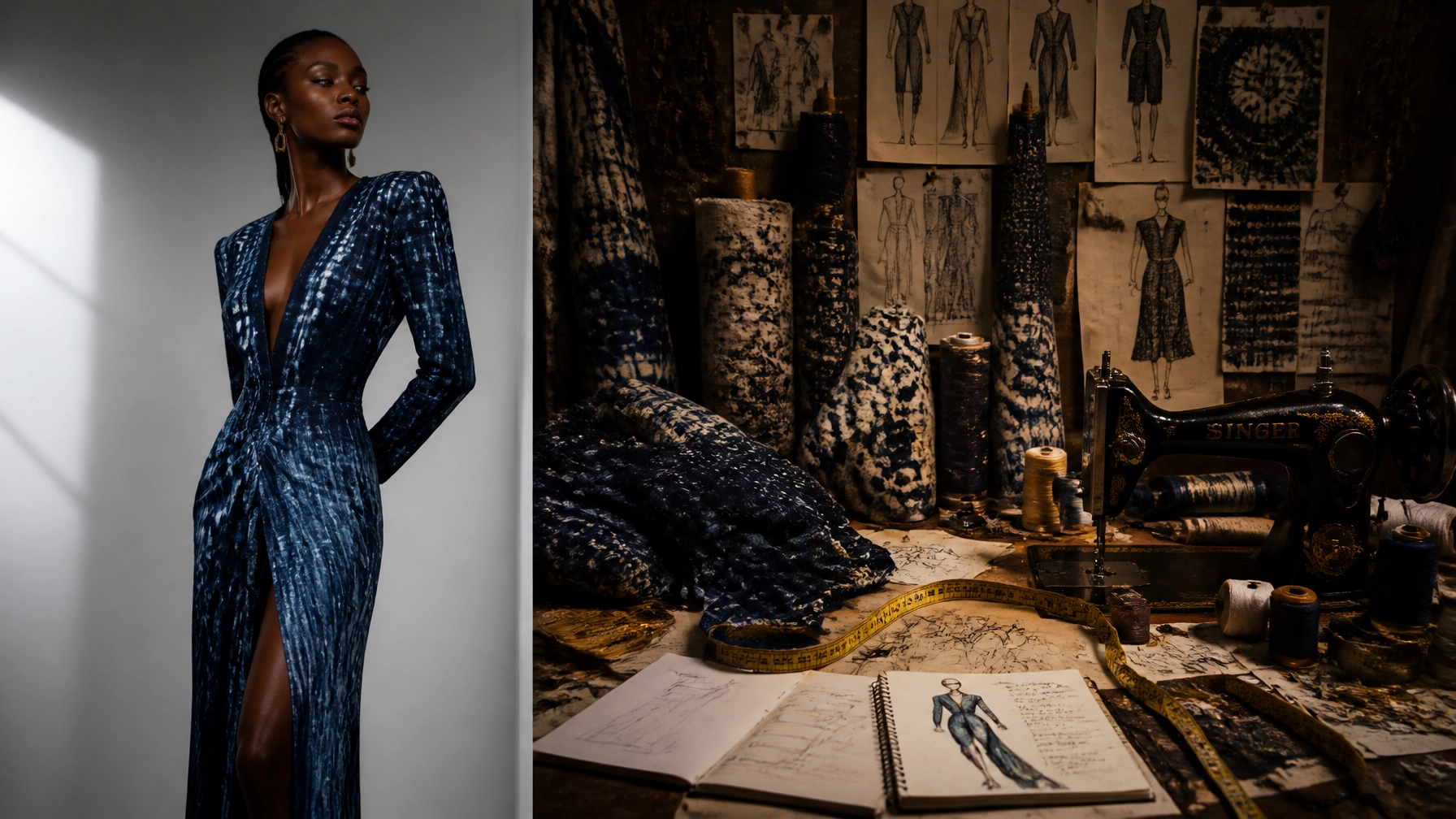
Take a single dress: the kind that makes people stop in the street. To the world, it is a statement of style. To the designer, it is the memory of a Tuesday morning in the humid chaos of Balogun Market, haggling over the last three yards of a specific lace that the supplier swore was in stock but wasn't.
It is the stack of brown pattern paper in a cramped studio, covered in pencil marks and erasures. It is the first version that fit perfectly on the mannequin but collapsed the moment a human body tried to move in it. It is the "helper" whose name isn't on the label but whose hands spent six hours hand-stitching the hem because the machine couldn't handle the delicacy of the weave.
Behind the garment is a world of logistics: the delivery rider who got stuck in traffic, the electricity that cut out just as the final seam was being closed, and the persistence required to keep going when the fabric behaved in ways it wasn't supposed to.

Then there is the song. On a streaming platform, it is three minutes and forty-two seconds of effortless cool. But that song wasn't born in a three-minute burst.
It was born in a bedroom studio in the middle of the night, where the glow of a single monitor was the only light in the room. It is the result of forty-eight different vocal takes, most of which were discarded because the emotion wasn't quite right. It is the invisible labor of the sound engineer who spent four hours EQing a snare drum that most listeners won't even consciously notice.
It is the session musician who played a brilliant bassline and then left, uncredited, into the Lagos night. It is the "unpaid online labor" of the artist: the hours spent pitching to playlists, responding to comments, and trying to convince an algorithm that this piece of their soul is worth showing to a few more people. The song is the tip of an iceberg; the work is everything beneath the water.

A chair is a simple thing, until you try to make one that lasts. Behind a piece of modern furniture is a roadside workshop where the air is thick with the scent of teak sawdust and the sound of a chisel meeting wood.
There is a specific kind of physical toll in furniture making. It’s the ache in the shoulders after six hours of sanding to get a finish that feels like glass. It’s the apprenticeship: the years spent watching a master's hands to understand how wood breathes, how it shrinks, and how it expands.
The buyer sees a functional object. The maker sees the struggle against gravity. They see the joint that had to be rebuilt three times because the wood was slightly damp. They see the delivery: the precarious journey on the back of a truck, navigating potholes and rain, just to ensure that the thing they imagined arrives in one piece.

Even the most "instant" of arts: photography: is built on a foundation of invisible hours. A single, stunning photograph is often the result of five hours of location scouting, three hours of lighting setup, and a dozen "perfect" shots that were ultimately rejected because the light shifted by a fraction of a degree.
The labor continues long after the shutter clicks. It is the post-production desk: the culling of two thousand images down to ten. It is the color grading, the meticulous retouching, and the file management. It is the "invisible media work" of interpreting a client’s vague brief and turning it into a visual reality that they couldn't describe but recognize instantly when they see it.

Why does this matter?
Because when we only talk about the finished thing, we make creativity look like magic. And when it looks like magic, the people who do the work feel like they are failing when it feels like a struggle.
If you are currently in the middle of a failed seam, a flat vocal take, a warped piece of wood, or a corrupted SD card, you aren't doing it wrong. You are simply in the world behind the work. You are in the "between": the space where the idea hasn't quite met the reality yet.
Every creation has a visible form and an invisible world.
We are interested in the world. We are interested in the systems that support the person in the workshop. We are interested in the infrastructure that makes the struggle sustainable. We are interested in the stories of the people who keep making things, even when the world only sees the final three minutes or the single dress.
If you are building that world, you don't have to do it in isolation. You can connect with a community that recognizes the labor, or apply to join a space designed for the makers who are ready to turn their imagination into an enterprise.
The work is hard. The work is often invisible. But the work is everything.