
Newsletter Subscribe
Enter your email address below and subscribe to our newsletter
Enter your email address below and subscribe to our newsletter

Creative entrepreneurship in Africa
The African creative economy is frequently described through the lens of potential. Analysts point to a market poised to reach $200 billion, fueled by the world's youngest population and a projected 10% contribution to global GDP by 2030.
But for the average creative founder in Lagos, Nairobi, or Accra, "potential" feels like a cruel joke.
The reality is a high-friction "survival-mode hustle." Despite global demand for African fashion, art, and digital assets, the majority of creative businesses remain trapped in a cycle of informal, inconsistent growth. According to UNCTAD, while creative services exports reached $1.4 trillion globally in 2022, Africa’s share remains disproportionately small at just 1.5%.
The problem isn't a lack of talent. It is an Infrastructure Gap.
To bridge this chasm, African creative commerce requires more than just "tips" or "inspiration." It requires an Execution Layer: a structured operating system where founders stop being artisans and start becoming architects.
Most accelerators focus on "Founder Intelligence": teaching people what to do. They provide the theory but leave the founder to struggle with the practice. This creates a gap where talent is abundant, but businesses are fragile.
In Nigeria alone, the entertainment and media sector is projected to grow to $12.9 billion by 2027. Yet, Brookings 2025 analysis reveals that up to 80% of cultural industries in some African nations operate in the informal economy.

This informality isn't a choice; it's a symptom of missing infrastructure. Without an execution layer, a creative founder is forced to be the CEO, the production manager, the logistics coordinator, and the debt collector simultaneously. This is not a business; it is a high-stress job with no benefits.
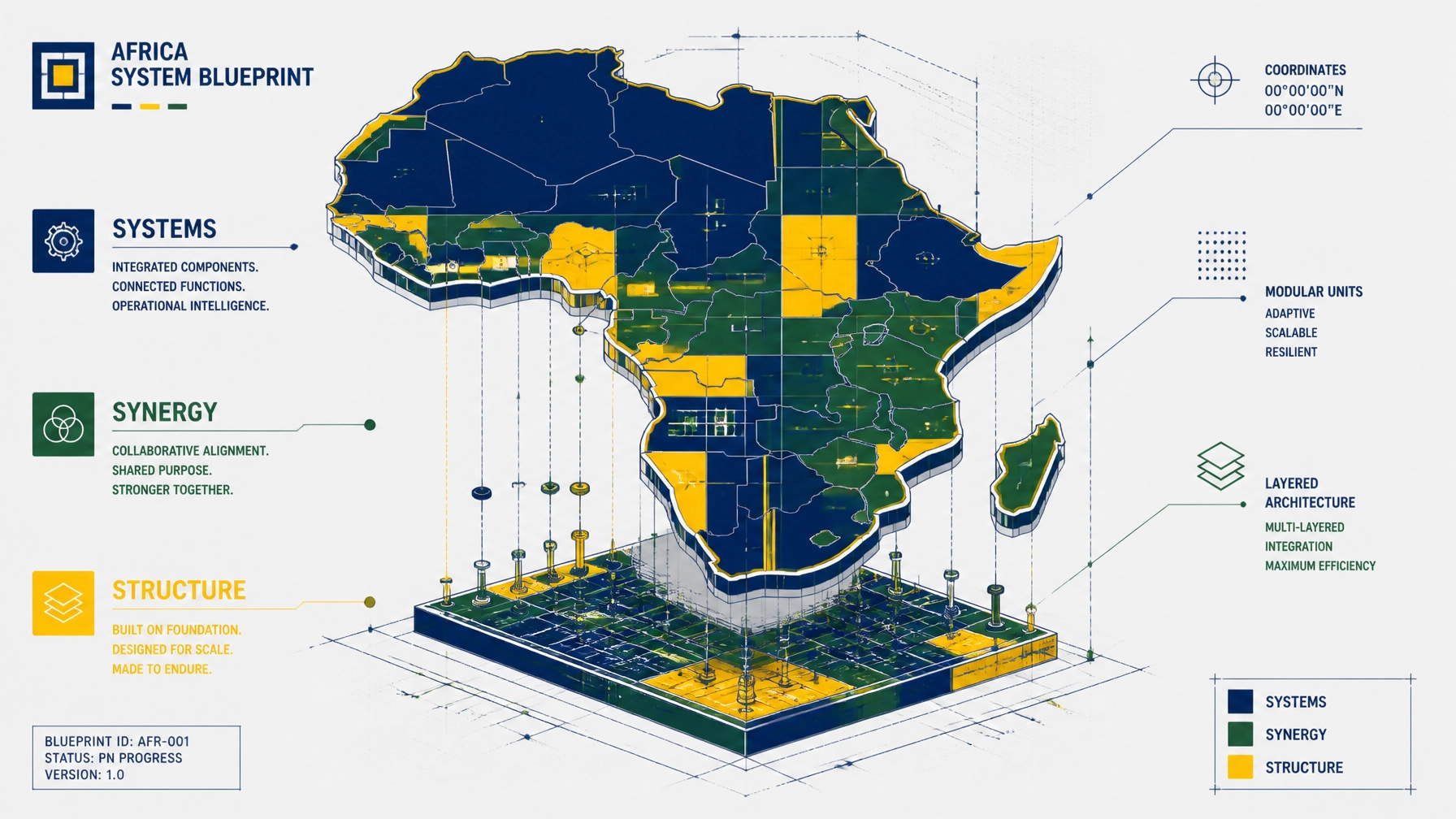
At vendoura, we categorize this as a failure of Infrastructure Synergy. When education, commerce tools, and accountability systems don't work together, the founder's energy is consumed by friction rather than growth.
Most creative founders are "Artisans." They are technically skilled, visually premium, but operationally cheap. They sell through Instagram DMs and WhatsApp, relying on "vibes" and word-of-mouth rather than repeatable systems.
This creates three invisible blindspots:

To cross the gap, you must transition from Artisan to System Architect. An Architect doesn't just "make products"; they build the machine that makes the products.
At vendoura, we don't just provide a marketplace. We provide the Execution Layer. Our ecosystem is built on the principle of Infrastructure Synergy: the idea that growth is not the result of one "lucky break," but the compounding effect of integrated systems.
When you align three core pillars, the friction of the hustle begins to disappear:

This synergy is what allows a fashion designer to move from selling five pieces a month to managing a structured brand with predictable product flows.
The African creative economy is at a crossroads. The AfCFTA presents a historical opportunity to tap into $21.9 billion in untapped export potential. But this opportunity is only available to those who have the infrastructure to meet international standards.
If your business is currently "visually premium but operationally fragile," you are not ready for the $200 billion shift. You are still in survival mode.
The "Frustrated Fix" is simple: Stop trying to grow through more "hustle." Start growing through better "systems."
Vendoura is designed for the serious creative founder: the one who is tired of being the bottleneck in their own business. We are the operating system for the next generation of African creative architects.
Your business failure isn't a lack of talent; it's a lack of an OS.
If you are ready to stop being an Artisan and start building as an Architect, the next step is not another "free webinar." It is a commitment to a structured execution framework.
The urgency for 2026 is simple: the market is formalizing faster than most founders are operationalizing. As buyer expectations rise, platform standards tighten, and cross-border opportunities expand, the absence of an execution layer becomes more expensive. In 2026, creative founders without systems will not just grow slowly; they will become structurally uncompetitive.
Apply for the Vendoura Sprint today. Transition your creative skill into a scalable, sustainable enterprise.