
Newsletter Subscribe
Enter your email address below and subscribe to our newsletter
Enter your email address below and subscribe to our newsletter

Creative entrepreneurship in Africa
The problem is the "Price-First" Trap and the collapse of Trust Infrastructure. A buyer shows interest, asks for price, and immediately meets a number with no context, no reassurance, no clear next step, and no system that makes the transaction feel safe. That is not a pricing moment. That is a trust-infrastructure failure. Most founders think they lost the sale at the price point. In reality, they lost it at the layer where the customer decides whether this business feels stable enough to buy from.
This post corrects the myth of the "unserious" buyer. Silence after a price message is usually not proof that the customer was unserious. It is usually proof that the business made buying feel unsafe, unclear, or mentally expensive. Founders use "unserious" as a shortcut when they do not want to inspect their own sales environment.
This post helps founders notice the beggar-energy in their DMs and the silent friction points inside their sales process. The rushed discount. The over-explaining. The "Are you still there?" follow-up. The delayed response. The lack of structure. The absence of clear policies. These are not harmless habits. They quietly lower trust and make the customer step back.
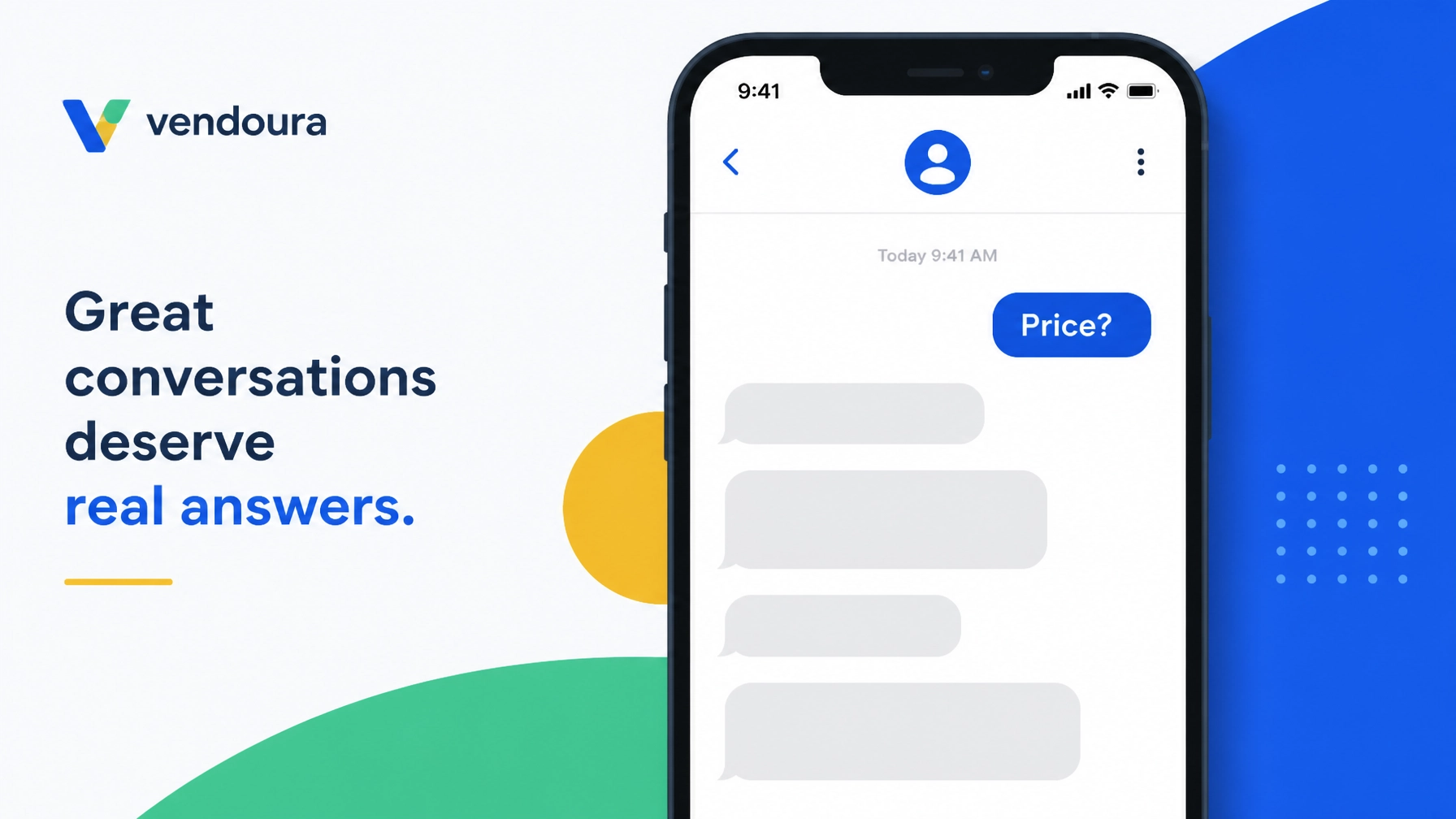
You check your phone. A new notification: "Price?"
You reply within minutes. You give them the number. You even add a polite "Let me know if you’re interested!" or a friendly emoji to soften the blow.
Then, nothing.
The gray checkmarks stay gray. Or worse, they turn blue, and the silence becomes deafening. They’ve seen it. They’ve processed it. And they’ve decided that whatever you are offering is not worth the energy it takes to type "No, thank you."
In the vendor community, we like to label these people "unserious." We call them "time-wasters" or "window shoppers." We tell ourselves they are broke or that they don’t value quality.
But at vendoura, we look at things differently. We don't blame the customer; we diagnose the system.
The truth is rarely that the customer is "unserious." The truth is usually that your brand has failed the Trust Infrastructure check. You have fallen into the "Price-First Trap," and you are bleeding sales because of invisible friction you haven't even noticed yet.
When a customer asks for a price before knowing anything else, you are in a race to the bottom.
If the first (and only) variable a customer has to judge you by is a number, they will treat you like a commodity. A commodity is something interchangeable, like a bag of salt or a gallon of petrol. If you sell a commodity, the only reason to buy from you is if you are the cheapest.

Most creative founders make the mistake of answering the "How much?" question too literally. By giving a raw number without framing it, you are asking the customer to perform a "Loss Assessment." Their brain immediately calculates: “Is the pain of losing $100 greater or less than the gain of this product?”
If you haven't established perceived value, the answer is always less.
The Diagnosis: Customers ask for price because you haven't given them anything else to value. If your Instagram feed is just a gallery of products with no context, no story, and no proof of transformation, the "Price?" message is the only tool the customer has to make sense of your business. You aren't being ghosted because you're expensive; you're being ghosted because your business lacks visible Trust Infrastructure.
We need to stop using the word "unserious." It is often a protective label founders use when they do not want to inspect the buying environment they created.
Very few people spend their free time DMing random businesses to ask for prices for things they have zero intention of buying. If they asked, there was a spark of interest. The "ghosting" happens when that spark hits a wall of Perceived Risk.
This is a Business Psychology problem before it becomes a sales problem.
When a customer sees a price from a small brand, their subconscious brain asks three questions:
If your brand signals are weak, if your profile looks "visually premium but verbally cheap", the risk feels too high. Silence is the customer’s way of managing that risk. They aren't "broke"; they just aren't convinced that you are the safest place for their money.
That means the issue is not only persuasion. It is operational clarity. Buyers trust businesses that look like they know what happens next. Clear delivery terms, visible policies, proof of fulfilment, consistent communication, and a stable tone all reduce perceived risk. When these are missing, the buyer has to imagine the worst-case scenario for themselves.
This is where Trust Compounding starts. Every clear process, every predictable response, every visible policy, and every fulfilled order adds another layer of safety in the customer’s mind. Trust is not built by saying "we are reliable." It is built by making reliability structurally visible.
At vendoura, we teach founders to move from "beggar-energy" pricing (hoping they say yes) to Authority-Based Selling. More importantly, we help founders build the infrastructure that makes that authority believable before the DM conversation even starts.
Sometimes, the reason for the disappearance isn't the price at all. It’s the friction.
Friction is anything that makes the customer have to think too hard, wait too long, or decode too much. In the fast-paced world of social commerce, every second of delay is a point of friction.
This is where Creative Business Operations becomes visible. A lot of founders think they have a marketing problem when they actually have a broken response system. If your DM flow depends on mood, memory, or manual back-and-forth, the customer feels the instability even if you never say it directly.
What looks like "DM ghosting" is often a failure in the Execution Layer. The business is relying on manual negotiation, manual clarification, and manual reassurance to carry trust. That is too fragile. Trust should not depend on whether you are online, patient, or in the mood to explain your process properly.

If a customer asks for a price in the comments and you reply with "Check DM," you have just added a massive layer of friction. You are forcing them to switch screens, look for a notification, and engage in a 1-on-1 conversation they might not be ready for. It feels like a trap. It feels like they are about to be "sold to."
Operationally, this is weak design. You are moving the buyer into a less convenient path because it suits the seller, not the customer. This is the opposite of Reducing Friction Points.
If someone asks "Price?" at 2:00 PM and you reply at 8:00 PM, they have already moved on. Their dopamine hit has subsided. They might have even bought the same thing from a competitor who has a structured store listing or a faster response time.
Slow replies do more than reduce momentum. They signal a business that may also be slow with fulfilment, updates, complaint resolution, and delivery. Buyers do not separate your response speed from your operating quality. They read one as evidence of the other.
This is why an Execution Layer matters. Automated commerce tools, structured listings, and standardized response systems reduce the number of moments where trust can leak out of the process. The goal is not to sound more convincing in the DM. The goal is to remove unnecessary dependency on the DM.
There is a specific way many small brands send prices that smells like desperation.
This kills authority. It signals that you don't have a system, and your prices are arbitrary. When prices feel arbitrary, customers feel they can get a better deal elsewhere or that you’re overcharging them based on how you feel that day.
The deeper issue is operational: if your pricing changes based on panic, then the customer is not speaking to a business. They are speaking to your anxiety. That is why "beggar-energy" is expensive. It makes the business feel unstable.
Manual negotiation creates inconsistent trust. Infrastructure creates repeatable trust.
To stop the ghosting, you must stop being a "Vending Machine" and start being an "Authority."
A vending machine is passive. You press a button, you get a price, you decide if you want the snack. An Authority is a guide. They diagnose. They structure. They lead the customer to a decision.
This shift is not cosmetic. It sits at the intersection of Business Psychology and Creative Business Operations. Buyers trust brands that reduce uncertainty. That reduction does not happen through confidence alone. It happens through structure.
In other words: authority is not just a tone. It is an infrastructure decision. If you want customers to feel psychological safety, you need an Execution Layer that reduces friction, standardizes buying, and makes the business feel dependable without requiring manual persuasion every time.

This post is exposing the reality that ghosting is a feedback loop.
If people are disappearing after hearing your price, it is a signal that your "Value-to-Price" ratio is off, or your "Friction-to-Ease" ratio is too high. You are likely acting as a skilled creative who sells things, rather than a business owner who operates a brand.
More specifically:
You cannot "motivate" a customer into buying from a brand they don't trust. You have to build the structure that makes the "Yes" inevitable. That means Reducing Friction Points, strengthening the Execution Layer, and letting trust compound through visible systems.
Most creative founders are stuck because they are trying to solve business problems with creative skills. You don't need better photos; you need a better operating system.
If you are tired of being ghosted and ready to build a business that people respect enough to pay: without the back-and-forth: it’s time to move beyond the DM.
Micro-Action:
Audit your last 10 "Price?" DMs. How long did it take you to reply? Did you give the price alone, or did you frame it with value? Did your message reduce risk, or just announce cost? And most importantly: what part of this process could have been handled by infrastructure instead of manual explanation?
Apply for the Vendoura Sprint. We don't just help you sell; we help you build the infrastructure that creates psychological safety, reduces friction points, and makes trust compound.