
Newsletter Subscribe
Enter your email address below and subscribe to our newsletter
Enter your email address below and subscribe to our newsletter

Creative entrepreneurship in Africa
Teni’s phone was a war zone.
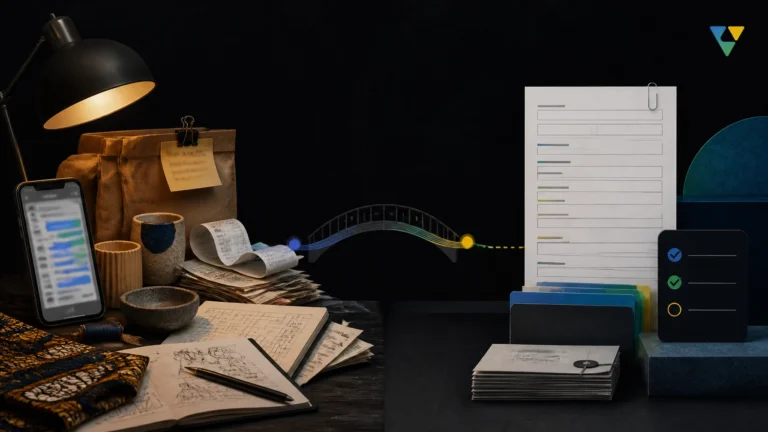
Every morning, she woke up to 40 unread WhatsApp messages. Some were new orders. Some were complaints about late deliveries. Most were just "pings" asking for prices she had already sent three times.
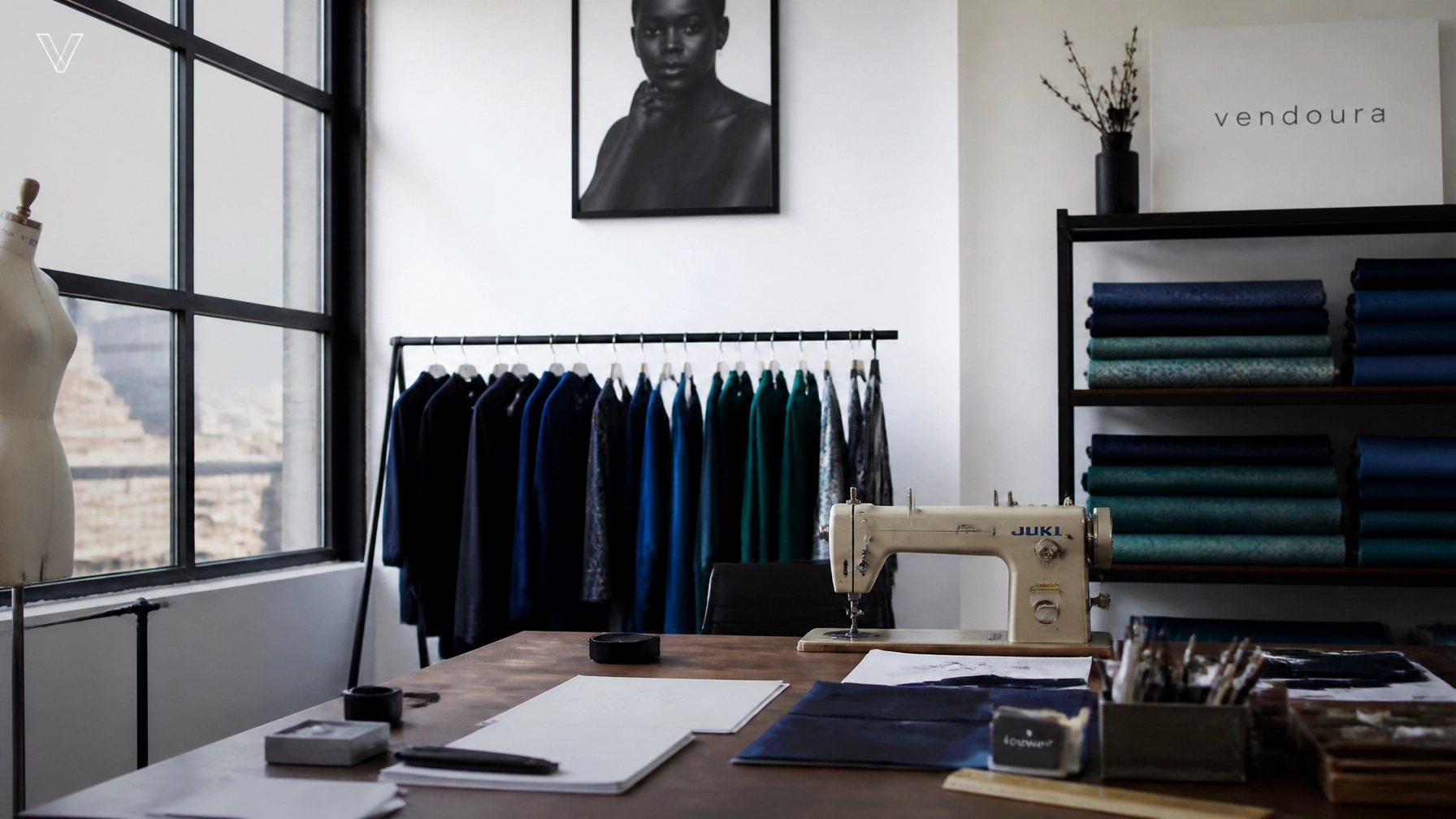
Teni is a brilliant tailor. Her stitches are perfect. Her designs are beautiful. But by 2:00 PM every day, she felt like she was failing. She was working 12 hours a day but her bank account wasn't growing. She was stuck in "survival-mode hustle."
She thought she needed more customers. She was wrong. She needed a machine.
Most creative founders are "Artisans." They are very good at a skill: sewing, designing, baking, or painting. They think that being good at the skill is the same as having a business.
It isn't.
If your business only moves when you are manually pushing it through WhatsApp, you don't have a business. You have a job that you can't quit. We call this the "Artisan Trap."

For Teni, her business was "written on water." Decisions were lost in chat threads. Measurements were hidden in voice notes. Growth was impossible because she was the only person who knew where anything was.
She was drowning in the friction of her own success. Every new customer made her more stressed, not more profitable. This is where most creative brands die. They don't die because the product is bad. They die because the infrastructure is missing.
When Teni joined vendoura, her growth coach, Vera, pointed out a "blindspot."
Teni’s Instagram looked like a million dollars. Her photos were high-end. But her "back-office" was cheap.
When a customer asked for an invoice, she sent a blurry photo of a handwritten receipt. When a vendor asked for a production schedule, she didn't have one.
Vera explained the concept of Infrastructure Synergy. This is the idea that your education, your tools, and your execution must work together. If you have a great skill (education) but no system (tools), you will always be tired and broke.
Teni didn't need "5 tips for better Instagram reach." She needed an operating system. She needed to stop being an Artisan and start being an Architect.
At vendoura, we don't believe in long, boring courses. We believe in execution. We are the Execution Layer for creative founders.
Teni entered her first 14-day sprint.
A sprint is a short, sharp burst of focused work. For two weeks, Teni stopped "trying to grow" and started "building the machine."
She used the Stage Map to see exactly where she was stuck.

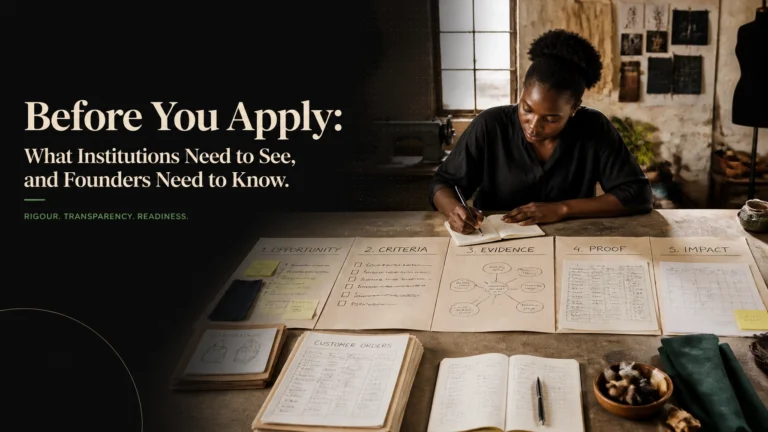
Most founders try to skip steps. They want "Scale" before they have "Structure." Teni realized she was trying to scale chaos. The Stage Map showed her that her first job was to build a Revenue Map.
A Revenue Map isn't just a goal. It is a clear path. It answers: How much money do I want? Where exactly is it coming from? What system is going to collect it?
The most important thing Teni learned wasn't a "marketing hack." It was the Weekly Commit system.
Every Monday, Teni had to tell Vera (her AI growth coach) exactly what one thing she would fix that week. Not ten things. One thing.
In the first week, her commit was: Move all customer measurements from WhatsApp to the vendoura database.
In the second week, her commit was: Automate the "Order Received" message so I don't have to type it manually.
By using the Weekly Commit, Teni stopped "hustling" and started "operating."

Vera would check in every day. If Teni got distracted by a "priority" customer, Vera would pull her back. "Is this helping you build the machine, or are you just being a tailor again?" Vera would ask.
This is the power of a system. It provides the discipline that humans often lack.
After three sprints, Teni the Tailor became Teni the Founder.
She no longer spends her mornings fighting with WhatsApp. Her customers now use a structured link to submit their orders. Her production team sees the Weekly Commit and knows exactly what to do without calling her.
She has moved from the "Survival" zone to the "Structure" zone on the Stage Map.
She isn't just "sewing clothes" anymore. She is building a fashion house. She owns the business; the business doesn't own her. This is what we mean by becoming an Architect. An Architect designs the system that does the work.

Most founders read this and think, "I'll do that when I'm bigger."
That is the mistake. You won't get bigger until you do this.
If your daily life feels like you are "running to stay in the same place," you are suffering from a lack of infrastructure. You are trying to build a skyscraper on a foundation of sand (and WhatsApp messages).
Infrastructure Synergy is what separates the people who "make things" from the people who "make money."
Stop giving yourself "tips." Stop looking for "hacks." Start building the machine.
Look at your phone right now. How many of your "business tasks" are buried in a chat thread where you might forget them?
If the answer is "more than zero," your business is at risk. You are operating in survival mode, and survival mode is the most expensive way to run a business.
It's time to stop the hustle and start the execution.
Apply for the next Vendoura Sprint here.
Don't just be an artisan. Be the architect of your own growth.