
Newsletter Subscribe
Enter your email address below and subscribe to our newsletter
Enter your email address below and subscribe to our newsletter

Creative entrepreneurship in Africa
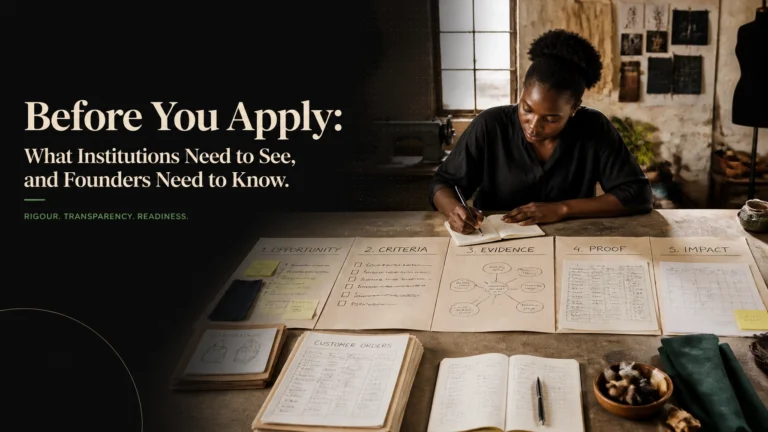
Muna is a creator. She has "the gift." For years, she made beautiful modern Adiré in her small apartment in Surulere. Her friends loved her work. Her family wore her designs to weddings.
But Muna had a problem. She was an Artisan, not an Architect.
She was stuck in the "Hustle Trap." She was selling to friends, but she wasn't building a business. She was waiting for the phone to ring, but she didn't have a machine to make it ring.
This is the story of how Muna used the vendoura engine to stop "hustling" and start operating.
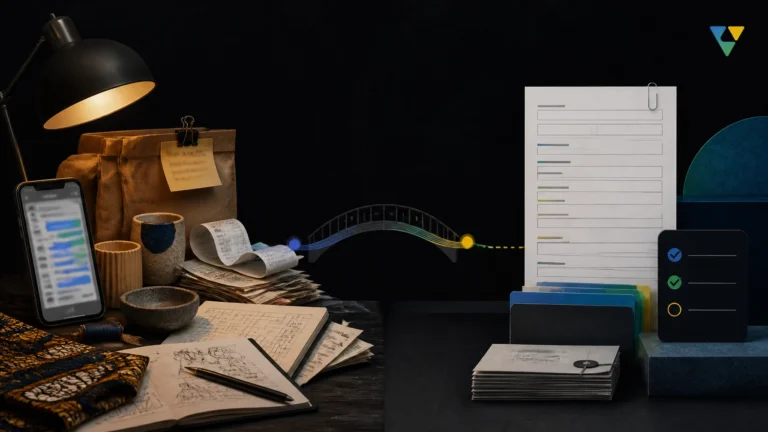
Before Muna joined vendoura, her business looked like a hobby.
She had the classic "beginner" questions:
She spent hours on Instagram. She posted pretty pictures. But when a customer asked for a price, she hesitated. She didn't have a pricing strategy. She didn't have a delivery system. She was "visually premium" but "verbally cheap."
She was doing "survival-mode hustle." This is where most creative founders fail. They think the problem is their "talent" or their "reach."
The real problem is the infrastructure.
Without a system, talent is just a job you can't quit. Muna was tired. She needed an operating system (OS).
Muna didn't need another "business coach" to tell her to "believe in herself." She needed tools that worked. She needed Infrastructure Synergy.
At vendoura, we don't just teach. We provide the Execution Layer. Muna started by using the Vendoura App to track her "Weekly Commits."

Muna learned that pricing isn't about cost + profit. It is about trust signals. If you price too low, you signal "amateur." If you price without a system, you signal "risk."
Using the vendoura commerce infrastructure, Muna standardized her offerings. She stopped "negotiating" on WhatsApp and started sending structured quotes. This shifted her identity from a "girl who sews" to a "Founder who delivers."
Muna used Vera, the AI Revenue Coach, to diagnose her blindspots. Vera noticed that Muna’s customer flow was broken. She was getting inquiries but no conversions.

Vera didn't give Muna "tips." Vera gave Muna operational clarity. She showed Muna that her "perceived risk" was too high because she had no clear return policy or delivery timeline. Muna fixed the machine, and the sales followed.
Once Muna fixed her internal systems, she needed market access.
The vendoura marketplace for small businesses isn't just a list of products. It is a collaborative ecosystem. Muna didn't have to find customers in a vacuum. She plugged into an existing community of founders who value structure.

She stopped asking "how to find customers for a new business" and started asking "how to optimize my conversion rate within the ecosystem."
Through Infrastructure Synergy, Muna connected with other vendors. She partnered with a luxury bag designer. They cross-promoted. They shared shipping costs. They reduced the friction of the "Lagos reality."
Today, Muna isn't just making Adiré. She is building a textile empire.
Muna moved from Artisan (skill-focused) to Architect (system-focused). She stopped working in her business and started working on the machine.

If you are a creative founder in Lagos, you know the struggle. You have the skill. You have the drive. But you are stuck in survival mode.
You don't need more "motivation." You need Structure. You need an Execution Layer.
You are probably visually premium but verbally cheap. You are probably talented but system-less.
It is time to evolve.
Don't build alone. Build with an engine that compounds your results.
Micro-Action: Stop wondering how to get first clients as a beginner and start building the machine that attracts them.
Build the business. Own the machine. Become the Architect.