
Newsletter Subscribe
Enter your email address below and subscribe to our newsletter
Enter your email address below and subscribe to our newsletter

Creative entrepreneurship in Africa
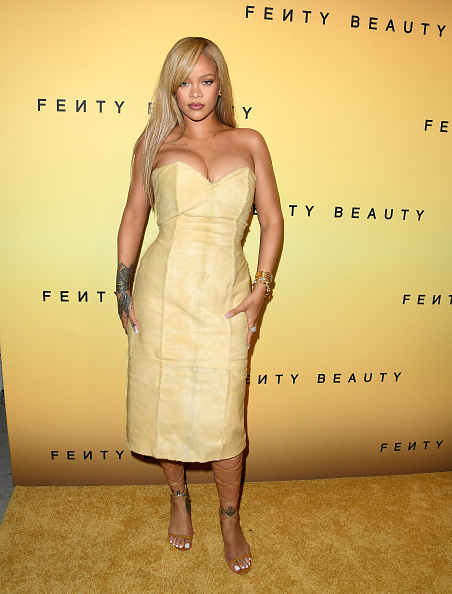
Most founders asking how to get clients for small business are asking the wrong question. Clients do not appear because your brand has vibes. They come when your business has a system that turns attention into trust, trust into buying, and buying into repeat demand.
That is what Fenty Beauty exposed in September 2017. This was not just a celebrity launch with nice photos and loud hype. It was a client acquisition machine. Rihanna did not just gather followers. She used structure to convert attention into buyers at scale.
In its first 40 days, the brand generated a staggering $100 million in sales. By the end of its first year, it had cleared $500 million. Most people called this "celebrity magic." That diagnosis is lazy. It misses the machine.
Rihanna did not win because fame is magic. Fame gets attention. Infrastructure gets sales, stock, speed, and repeat reach. The real force behind Fenty was not celebrity sparkle. It was LVMH infrastructure.
While Rihanna gave the brand cultural pull, Infrastructure Synergy gave it force. Fenty was not just a makeup line. It was a high-speed operating system built to attack a blind spot the beauty industry kept ignoring.
At vendoura, we do not study Rihanna because she is famous. We study the machine behind the result. She did not stay at the level of product hype. She plugged into real business architecture and used it to move an entire market.
Most creative founders think big brands win because the founder is famous, gifted, or "special." That is the wrong lesson. It keeps people stuck.
Rihanna did not validate Fenty by asking if people liked makeup. She validated it by seeing a system failure: the beauty industry kept under-serving deeper skin tones at scale.

She did not just "have an idea." She plugged into Kendo, the LVMH-owned brand incubator. That gave her access to:
This is Infrastructure Synergy. This is the real magic. Not celebrity. Not vibes. Not press. Without Kendo and LVMH, Fenty could have become another overhyped brand with nice packaging and weak backend operations. With LVMH, the brand had the execution layer to move fast, stay in stock, and meet demand at scale.
That is the founder lesson. Culture may open the door. Infrastructure is what walks through it.
Founders often struggle with how to create an offer people will buy because they study features and ignore friction. They add more colors, more parts, more noise.
Fenty did the opposite. It removed friction.
Before Fenty, a woman with deep skin tones often had to mix two foundations to get close to the right shade, or settle for one that looked wrong. That is friction. Fenty’s offer was not just "makeup." It was "finally, this was built for you."
By launching 40 shades on day one, Fenty did not just make a marketing claim. It sent a Trust Signal. It told the market, with structure, that darker skin tones were not an afterthought.

The Diagnostic Shift:
The most common question we get at vendoura is how to find customers for a new business. The uncomfortable truth? If you have to "find" customers, your infrastructure is probably broken.
Fenty didn't have to "find" customers. They simply had to provide a destination for the customers who were already there, shouting, ignored by the rest of the world.
Rihanna used a "Gravity-Based Growth" model. She didn't chase people; she built a high-value ecosystem (The Fenty Effect) that pulled them in. She focused on Market Access: ensuring that if a woman in London, Dubai, or Lagos wanted the product, the infrastructure to get it to her was already in place.
Most creative founders are stuck in "Survival-Mode Hustle." They are the maker, the marketer, the support team, and the delivery system. That is not a business. That is a bottleneck.
Fenty Beauty is clear proof that Infrastructure Synergy compounds results. Rihanna brought the cultural signal. LVMH brought the machine.

That is the part many founders miss. They copy the face. They do not study the backend. They admire the launch. They ignore the infrastructure that made the launch hold.
At vendoura, we built our platform to be the "Kendo" for the emerging creative founder. We are not here to give you random growth tips. We provide the Execution Layer: the tools, commerce infrastructure, and peer-driven accountability that turn creative skill into a structured, scalable enterprise.
We move you from being an Artisan to being an Architect. That means building a machine that works beyond your daily energy.
Every piece of content must diagnose a failure. If your business is stuck, it is rarely because you are not creative enough. It is usually because you are trying to scale a skill without a system.
You are:
Rihanna did not win because she is Rihanna. That is the lazy headline. She won because she paired cultural power with a world-class operating system. In the modern economy, infrastructure is destiny.
Don't wait for the "perfect time" to build your 40 shades. You don't need LVMH's billions, but you do need their logic. You need a structured environment where you can execute without the friction of "doing it all alone."
Apply for the Vendoura Sprint.
Stop chasing "celebrity magic." Start building the machine.
Apply for Vendoura Sprint | Join the Waitlist
Category: Economy