
Newsletter Subscribe
Enter your email address below and subscribe to our newsletter
Enter your email address below and subscribe to our newsletter

Creative entrepreneurship in Africa
You are tired. We know because we’ve been there.
You spend six hours a day making the "perfect" product. You spend another four hours on Instagram, praying the algorithm gods notice your reels. You’ve probably thought about running Facebook ads, but your bank account is currently whispering, "Don't you dare."
This is the Everything Trap. You are trying to be the creator, the marketer, the salesperson, and the delivery guy all at once. And despite all that hustle, your DMs are as quiet as a library at midnight.
You are stuck on the WhatsApp Plateau. You sell to your friends, your aunties, and that one guy from secondary school who always asks for a discount. But high-paying clients? They feel like a myth.
Stop waiting. Start selling.
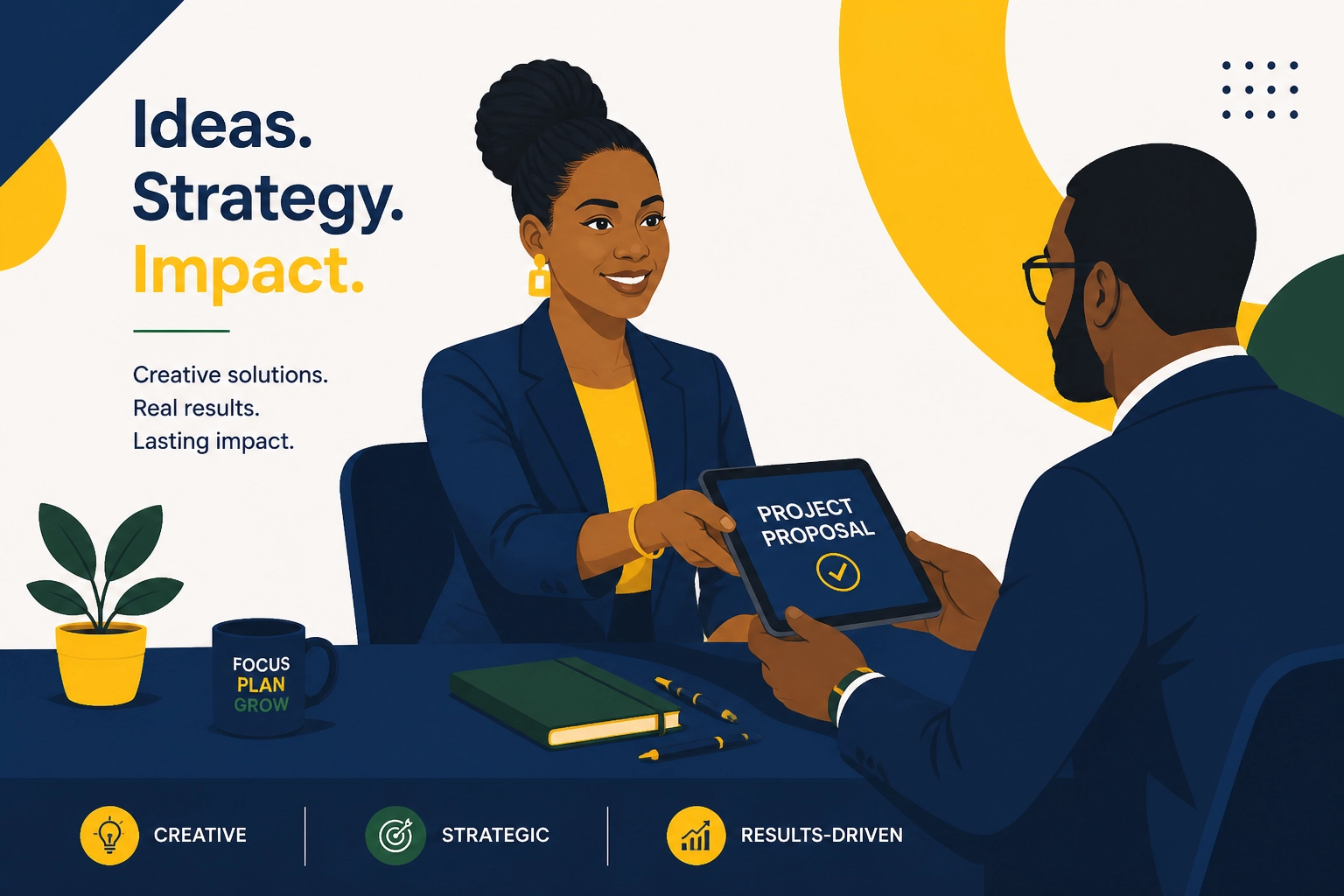
You don’t need a 500k ad budget to find clients. You need a system. Specifically, you need the Zero-Kobo Client System. This is the exact framework we teach at vendoura to help creative founders move from "talented artist" to "system architect."
In the next 14 days, we are going to get you 5 clients. No ads. No begging. Just structure.
Most gurus tell you to "just run ads." Here is the spicy truth: Ads don't fix a broken business.
If you don't have a system to close a lead, an ad just helps you lose money faster. If you haven't proven that people want what you’re selling, an ad is just a very expensive megaphone for a message nobody cares about.
Before you spend a kobo on Meta or Google, you need to master the art of the Systematic Close. You need to prove your value in the "real world" first.
At vendoura, we believe structure is the guardian of creativity. Without a system to get clients, your creativity will eventually starve.

The biggest mistake beginners make is asking for a sale before they’ve given any value.
Think about it. If a stranger walked up to you on the street and asked for 50,000 Naira for a dress, you’d walk away. But if that same person spent 10 minutes showing you how to style the clothes you already have, you’d actually listen.
Community Reciprocity is the secret sauce. It means giving value first so that people feel a psychological need to return the favor.
Stop trying to sell the "Big Transformation" on day one.
If you are a fashion designer, don't try to sell a 200k wedding gown to a stranger in a DM. Sell a Micro-Deal. A micro-deal is a low-risk, high-value entry point. It’s the "foot in the door" that makes the "Yes" easy.

You cannot be the "Designer for Everyone." When you are for everyone, you are for no one.
When you specialize, you can charge more because you are an expert, not a generalist.
Create an offer that is too good to say no to.
The goal of the micro-deal isn't to get rich. It’s to turn a stranger into a client. Once they trust you with something small, they will trust you with the big stuff.
You are one person. You have 24 hours. You cannot find every client yourself. You need Strategic Partnerships.
Find people who serve the same client as you but offer a different service.
Get off your bed. Seriously.
High-paying clients are rarely found by scrolling on your phone. They are found in coffee shops, coworking spaces, and industry events. If you want to sell to business owners, you need to be where business owners work.
Check out the events calendar at VenHub to see where other serious founders are gathering. Proximity is power.

We promised you 5 clients in 14 days. Here is your micro-action plan. No excuses.
Stop being a generalist. Pick one specific person you serve and one specific problem you solve. Update your bio. Open your store listing and rewrite your descriptions.
Join 3 communities where your target clients hang out. Do not sell anything. Answer 5 questions every day. Provide so much value that people start clicking your profile.
Reach out to the people you helped in Phase 1. Offer them your "Foot-in-the-door" deal.
"Hey, I saw you were struggling with X. I'm doing a quick audit for 5 people this week to help with that. Want in?"
Find 3 potential partners. Send them a DM. Don't ask for a favor. Offer a collaboration.
"I love your work! I have a client base that needs [Their Service]. Could we chat about a referral partnership?"
Being "talented" isn't enough in 2026. Talent is common. Systems are rare.
The founders who scale past the WhatsApp Plateau are the ones who build an operating system for their growth. They don't wait for "luck." They use frameworks. They use tools like the Vendoura community to find accountability and structure.
You have a choice today. You can keep "hustling" until you burn out, or you can become an architect.
An architect doesn't just build a house; they design the blueprint first. Your business needs a blueprint. It needs a way to get clients that doesn't depend on how many hours you spend on TikTok.
If you are ready to stop the "Everything Trap" and actually build a business that scales, you need more than a blog post. You need a cohort. You need discipline.
Apply for the next Vendoura Sprint.
We don't do fluff. We don't do "motivation." We do execution. We help you build the structure your creativity deserves.
Click here to join the waitlist for the next Vendoura Sprint.
Stop waiting. Start selling. Your first 5 clients are waiting for you to get organized.