
Newsletter Subscribe
Enter your email address below and subscribe to our newsletter
Enter your email address below and subscribe to our newsletter

Creative entrepreneurship in Africa
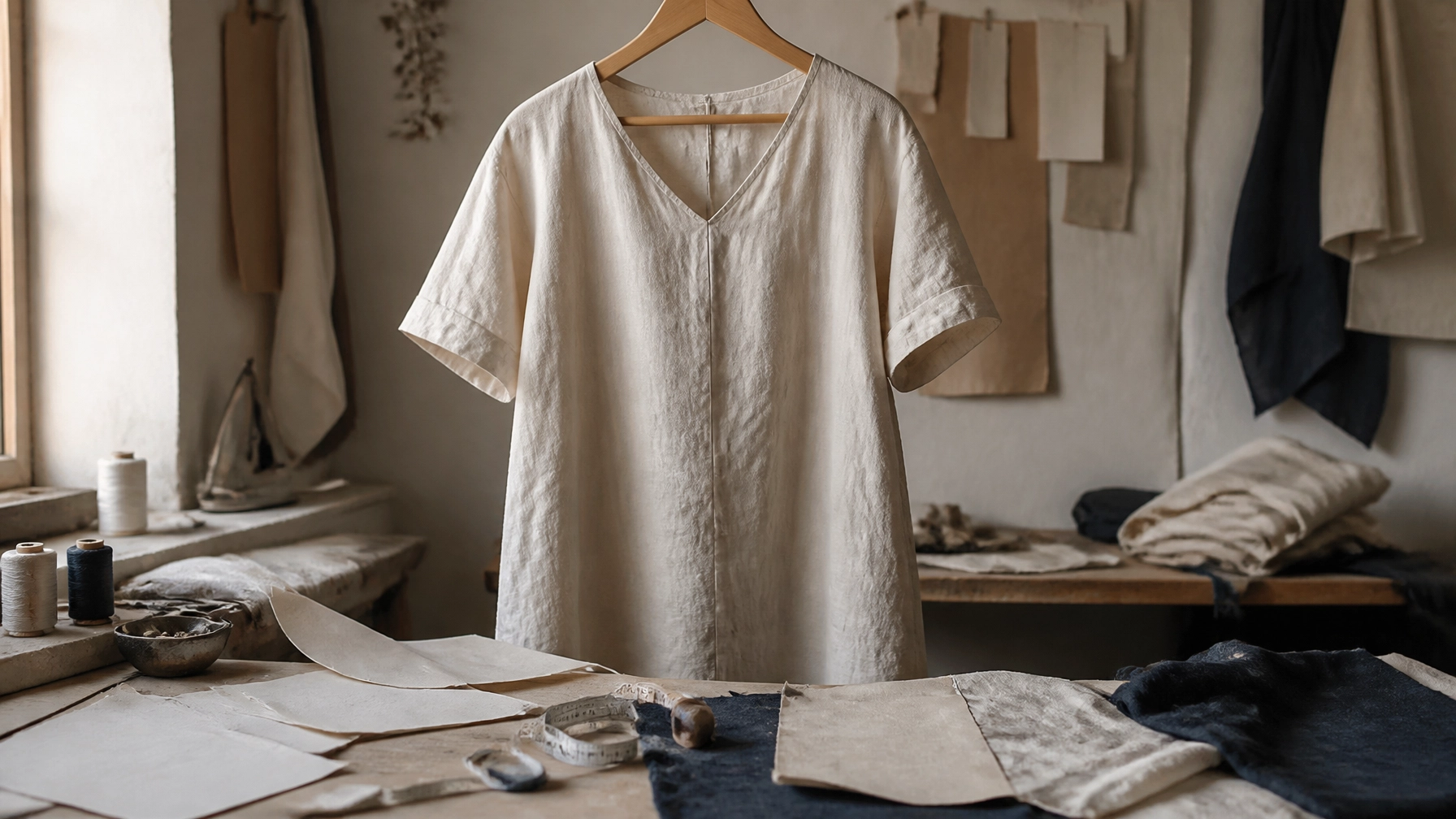
There is a garment hanging near the window.
It is simple at first glance. Fabric, thread, a familiar shape. Perhaps a loose blouse, a dress with a clean neckline, a pair of trousers with an ordinary waistband. It rests on a wooden hanger, still carrying the slight folds from being handled.
Most people will see a product.
The maker sees a compressed history.
They see the first moment the garment existed only as an image in someone’s head. They see the paper pattern spread across a table, the chalk marks, the fabric folded and unfolded, the seam that had to be opened. They see the hours that do not appear in the price tag, the decisions that disappear into the finished shape, and the uncertainty that stayed in the room until the very end.
The garment is the visible part.
Everything else is still inside it.
In the beginning, there was no garment.
There was only an idea. A line imagined at the shoulder. A certain kind of fullness at the sleeve. The memory of a fabric seen somewhere. The feeling of wanting something that did not yet exist.
An idea is light in the mind. It can change shape without costing anything. It does not fray, shrink, resist the needle, or fall differently than expected.
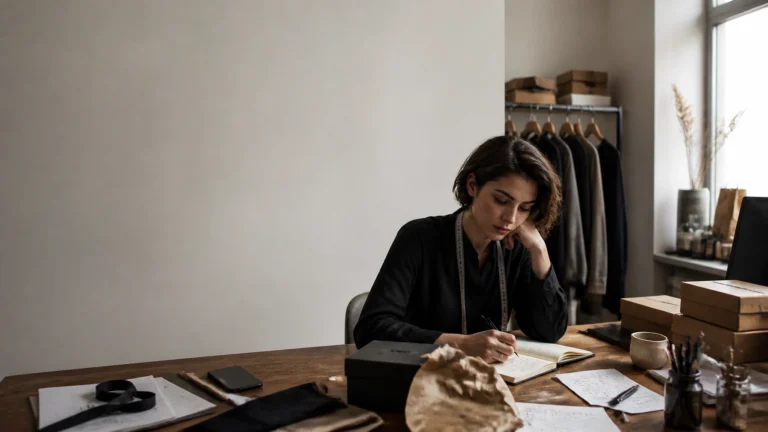
For a while, the maker has to hold the whole thing alone.
Then comes the sketch.
The sketch is the first time the idea agrees to become visible to someone else. It may be rough. It may be drawn in the margin of a notebook or on the back of an old sheet of paper. It may contain more questions than answers.
How long should it be?
Where should the sleeve end?
What happens when the wearer sits down?
The sketch is not the garment. It is the first piece of evidence that the garment might be possible.

A pattern makes the idea more demanding.
It asks the maker to translate a flat drawing into something that will move around a body. Front, back, sleeve, collar, facing, waistband. Pieces that look strangely shaped on paper but must meet each other precisely in fabric.
There are measurements, seam allowances, grain lines, curves that have to match.
The pattern is where the imagined garment begins to develop consequences.
A line that looked elegant in a sketch may pull when the arm rises. A neckline may sit too close. A pocket may land in the wrong place. A shape that looked balanced on paper may become awkward when it is cut and worn.
The maker learns this by making.
Not by knowing everything beforehand.
The fabric has its own opinion.
It may be softer than expected, or stiffer. It may hold a fold beautifully and refuse to hold another. It may be the right colour but the wrong weight. It may be perfect except for the price, the quantity available, or the fact that the supplier cannot promise it will be there next month.
There is the search for it: the visits, the messages, the photographs sent back and forth. There is the handling of samples, the checking of the weave, the attempt to imagine how the fabric will behave after cutting.
There may be haggling.
There may be a long pause before the maker decides.
Sometimes the right material is found. Sometimes a compromise is made. The design changes slightly because the fabric asks it to. The sleeve becomes shorter. The lining disappears. The shape becomes simpler, not because simplicity was always the plan, but because the available material has become part of the conversation.
Before the fabric reaches the worktable, it has already passed through other hands, other rooms, other decisions.
By the time it becomes a garment, none of that is visible.
Materials do not appear because the garment is beautiful.
Someone had to pay for the fabric. The thread. The buttons. The lining, perhaps. The transport. The electricity. The packaging waiting at the edge of the room.
Maybe the money came from an earlier order. Maybe it was gathered slowly. Maybe another expense was postponed so this one could happen. Maybe the maker bought less fabric than they wanted and worked around the limitation.
There is a cost to bringing materials together before a single stitch is made.
There is also a cost to waiting for the money to be enough.
That part rarely travels with the garment. The customer receives the finished piece, not the quiet calculations that came before it.
Then there are the hands.
The maker’s hands know things the garment will never explain. They know how much pressure to use when guiding the cloth. They know when a machine sounds wrong. They know the difference between a seam that is secure and one that only looks secure.
Those hands learned slowly.
Through crooked lines. Burned fingers. Uneven hems. Needles broken at inconvenient moments. Fabric cut too quickly. Measurements taken twice and still misunderstood.
Skill is often described as if it arrives fully formed. It does not. It accumulates in the body. It lives in the small correction made before anyone else notices there is a problem.
The maker may not remember every mistake, but the garment carries the knowledge gained from them.
A finished garment is full of things that are no longer there.
The seam ripped open because the pieces did not sit correctly.
The sleeve removed and attached again.
The first version that looked fine on the table but wrong on a body.
The almost-discarded attempt, left on a chair while the maker walked away for a while.
There is a particular kind of silence in unpicking work. The thread comes out in tiny pieces. A whole section is returned to its earlier state. Progress becomes difficult to see.

The failed version may never be shown to anyone. It may be cut up for another use. It may remain in a bag at the back of the studio. But it has done its part. It has told the maker what the final garment could not have said on its own.
Try again.
Move this here.
Make that smaller.
Leave more room.
The finished garment looks certain. The making of it was not.
At some point, the garment begins to have a customer.
Sometimes the customer is known. Sometimes they are imagined.
The maker thinks about who might wear it, where they might go in it, whether they will feel comfortable, whether the fabric will make them pause when they put it on. They imagine the garment moving through an ordinary day: sitting, walking, reaching, being washed, being worn again.
A handmade piece is made for a body, not only for a photograph.
The maker hopes the customer will notice the good things. The clean finish. The way the sleeve falls. The softness of the inside seam. They may also hope the customer will forgive the small evidence of the hand: a slight irregularity, a detail that could not have come from anywhere but a person.
The garment leaves the studio carrying an imagined relationship.

Delivery is its own kind of making.
The garment is folded. Threads are checked. A label is attached. Tissue paper is arranged. Perhaps there is a note, written quickly or carefully. The package is closed.
Then the maker gives it to someone else.
This can feel ordinary from the outside. A parcel changes hands. A payment is confirmed. A message arrives to say it has been received.
But for the maker, the room has changed.
The work that occupied the table is gone. The uncertainty has moved somewhere else. The garment now belongs to the customer’s day, their wardrobe, their body, their life.
The maker waits to hear what happened next.
One sale can make another garment possible.
It can replace the fabric used. Pay for the next roll of thread. Settle a small debt. Make room for a better tool. Give the maker enough confidence to try a more difficult shape.
Or it may not.
The price of one garment does not always return the whole world that went into it. Sometimes the sale is welcome but insufficient. Sometimes it keeps the work moving. Sometimes it proves that people want the thing, even if the maker is still trying to find a way to continue making it.
The next order is not guaranteed.
It waits somewhere beyond the finished garment, carrying its own questions.

We see the garment and call it a product.
The maker sees decisions, failed attempts, relationships, materials, money, time, uncertainty, persistence, and labour that cannot be separated from the cloth.
The thing itself is the visible tip of that world.
Next time you hold something handmade, you may feel its weight differently. Not because it is precious in some distant, romantic sense, but because you can sense the many things that had to exist first.
The object is not the work.
The work is everything that had to exist before the object could arrive in your hands.
If you have made something whose story is larger than its finished form, you can find Vendoura’s founder community and share what lives behind it.